

Hydrogen-oxygen inhaler [KYJ-QYWH-A]

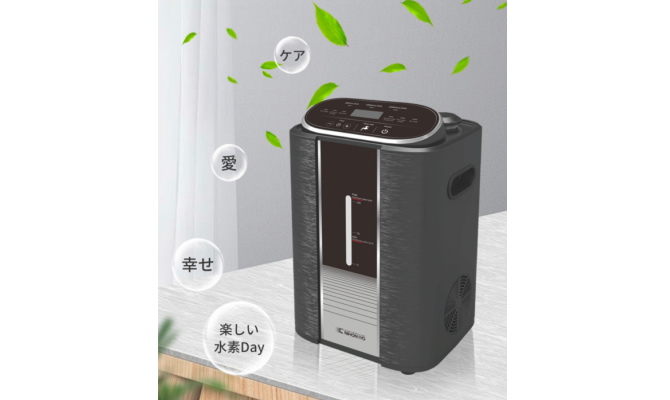
It boosts cellular activity, promotes detoxification, and enhances immune function.
- Lightweight Model: Designed in Japan
- Hydrogen purity: 99.99%
- Oxygen purity: 99.99%
- Separation and release of hydrogen and oxygen
- Equipped with a monitoring system
- Flow rate: 600 ml/min, 1000 ml/min, 1500 ml/min
- Advantage
- Authentication
- FAQ
Composed of modules
The hydrogen-oxygen atomizer consists of the following modules:
- Main Unit (Ultrasonic Nebulizer Module, Water Electrolysis Chamber Module, Gas-Liquid Separation Module, Cooling Module, Humidification Filter Module, Resin Filter Control Module, Liquid Level Indicator Window)
- Accessories (hydrogen-oxygen tube)
- Gas production:600mL/min、1000mL/min、1500mL/
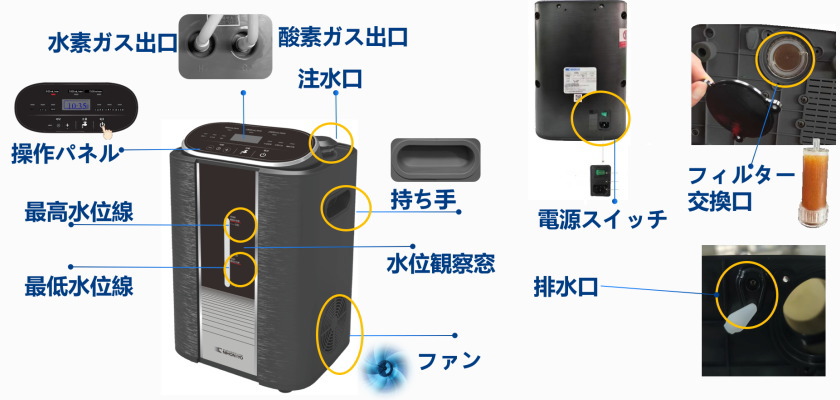
Stable operation
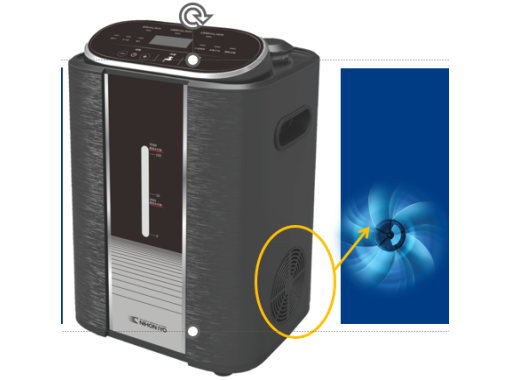
Compatible with everything from air-cooled to water-cooled tanks, minimizing condensation and noise issues
Ensure stable operation over long periods
01 Filter
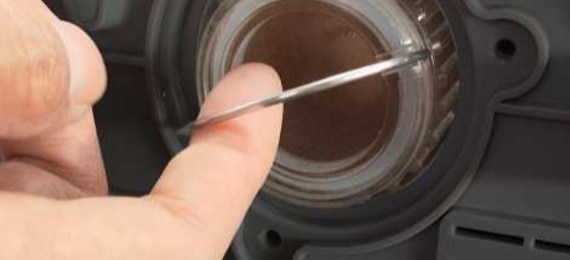
Filter design: Combines internal and external filters for easy removal
02 Tank
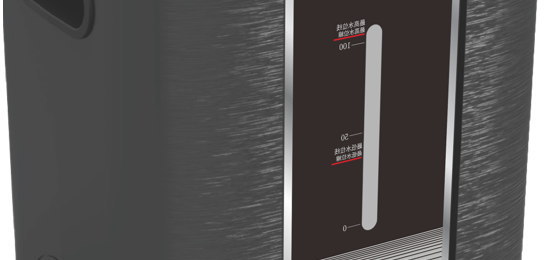
Weight reduction of the tank: Replacing the metal tank with a plastic one to reduce weight
Equipped with a large touchscreen
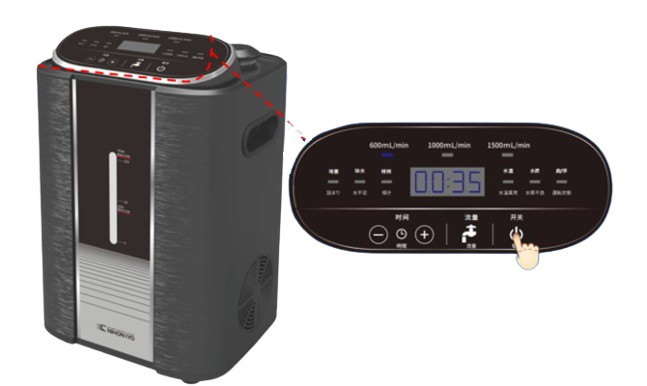
Equipped with a large touchscreen
Reminder function via indicator lights
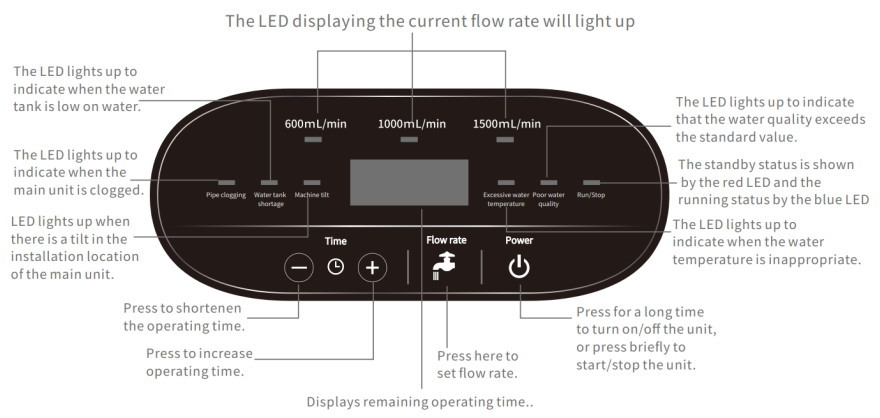
Flexible flow rate and time settings
-
Equipped with a multidimensional monitoring system
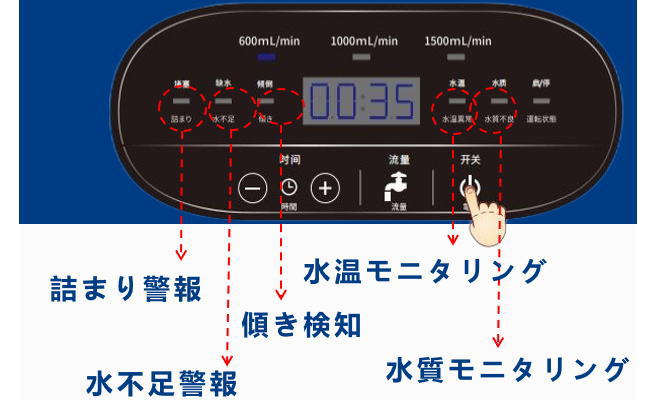
-
Flexible flow rate and time settings
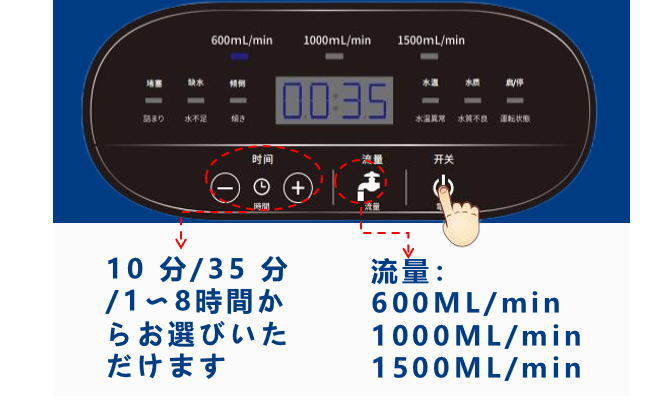
Electrolysis Technology
| Alkaline water electrolysis | Solid Polymer Electrolyte Membrane (PEM) Water Electrolysis | High-temperature steam electrolysis | |
| Illustration | 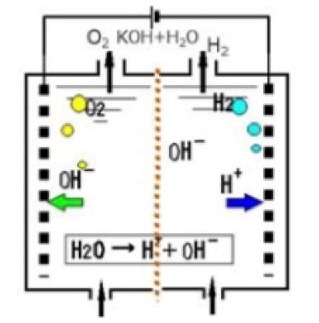 | 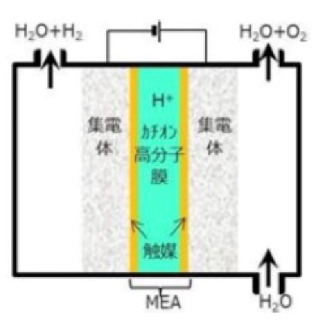 | 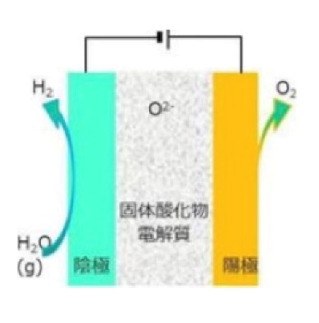 |
| Advantages | Durable | Durable | Since no platinum group metals or similar materials are used in the components, there is potential for cost reduction. |
| The materials used are inexpensive metals such as iron and nickel, making it easy to scale up the design. | Features the latest-generation N117 membrane from the U.S., offering high airtightness that completely blocks oxygen generated at the anode, thereby achieving complete separation of hydrogen and oxygen. | The electrolysis efficiency is approximately 30% higher than that of alkaline water electrolysis or PEM water electrolysis | |
| Disadvantages | The hydrogen concentration produced is low | Compact | Operation requires a temperature of just under 1,000 degrees (a warm-up period is required) |
| The equipment takes up a large amount of floor space | |||
| Poor responsiveness to fluctuations in power supply | |||
| Low resistance to overload | Poor responsiveness to changes in hydrogen gas production |
Conventional electrolysis technology
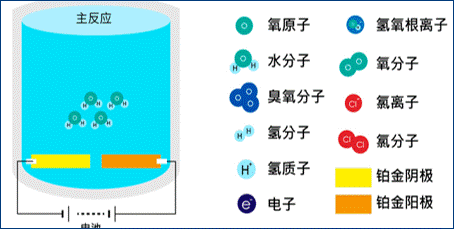
Since water does not conduct electricity very well, conductive substances such as sodium hydroxide (NaOH) were added to promote electrolysis.
However, this method carries the risk that the purity of the hydrogen will decrease due to the volatilization of chemicals, and that byproducts will be generated.
PEM-type water electrolysis
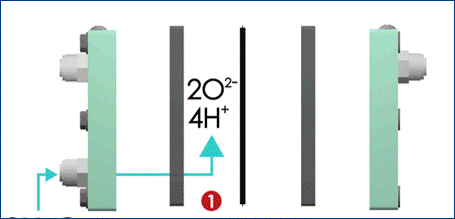
Features the latest-generation N117 membrane from the U.S.
- Provides high airtightness and completely blocks oxygen generated at the anode
- Achieving complete separation of hydrogen and oxygen
- Highly durable and long-lasting
-Capable of operating at low temperatures
- There is no risk of byproducts forming even with long-term use
Electrolytic cell and exchange membrane
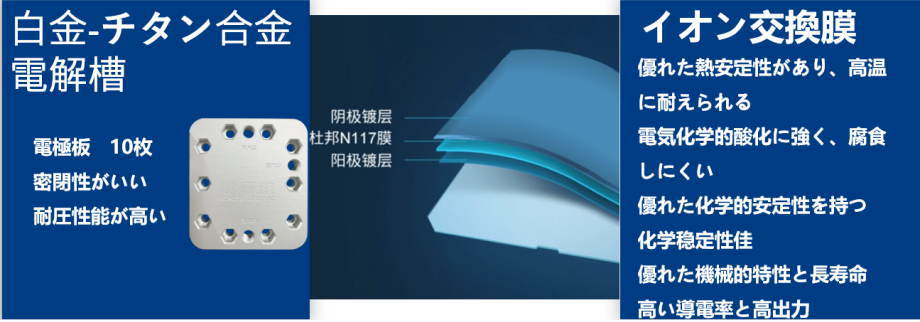
Gas-liquid separation structure
In some commercially available hydrogen inhalers, the hydrogen and water produced during electrolysis are often not sufficiently separated; as a result, the hydrogen may contain a significant amount of moisture, which can affect its quality.
Our machines feature an optimized internal design that effectively separates hydrogen and water after electrolysis using a gas-liquid separator, significantly reducing the moisture content in the hydrogen and enabling the supply of higher-purity hydrogen.
Safety
- Multiple components inside and outside the main unit feature 304 stainless steel brackets, which reinforce the connection between the internal structure and the outer casing, ensuring high durability and impact resistance.
- Electrical safety is of the utmost importance. This product features a cross-sectional design that completely separates the internal electrical circuits from the water passages, offering even greater safety and reliability compared to conventional vertical separation designs.
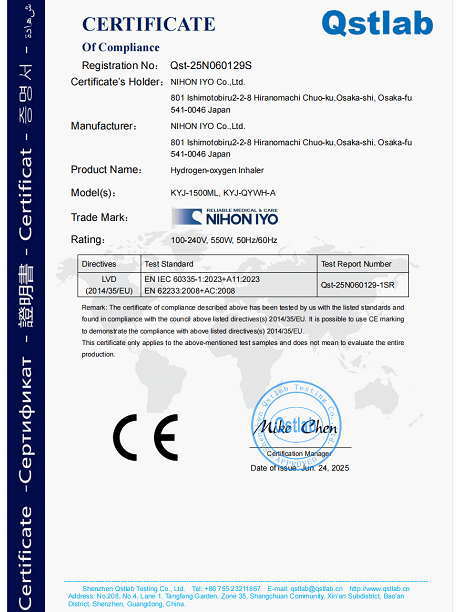
Authentication
Certification of the Purity of Generated Hydrogen and Oxygen
-
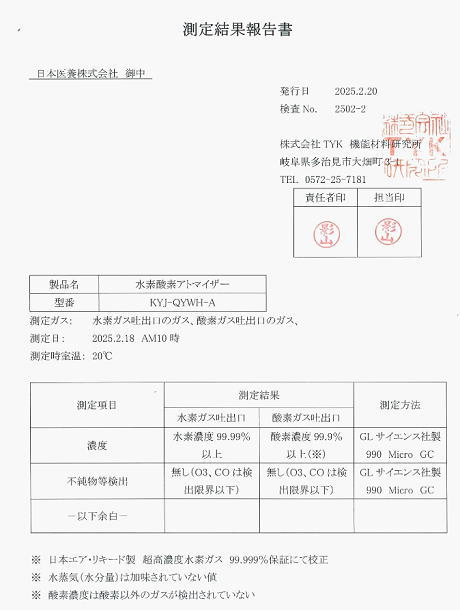
Measurement Results Report
-
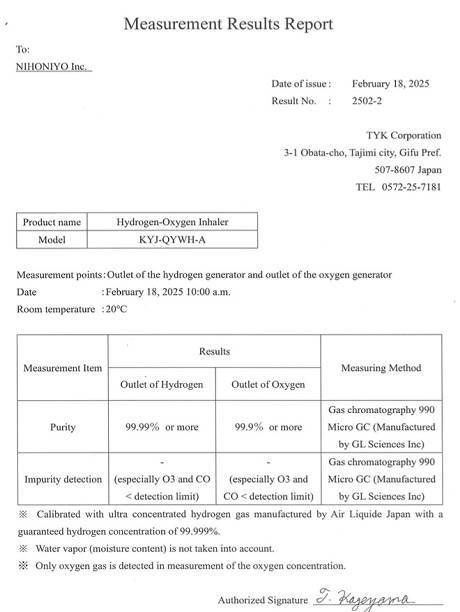
Measurement Results Report
PSE METI Certification
-
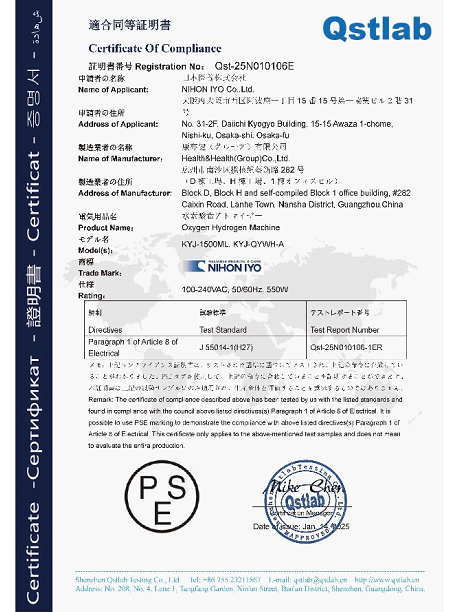
Certificate of Equivalency
-
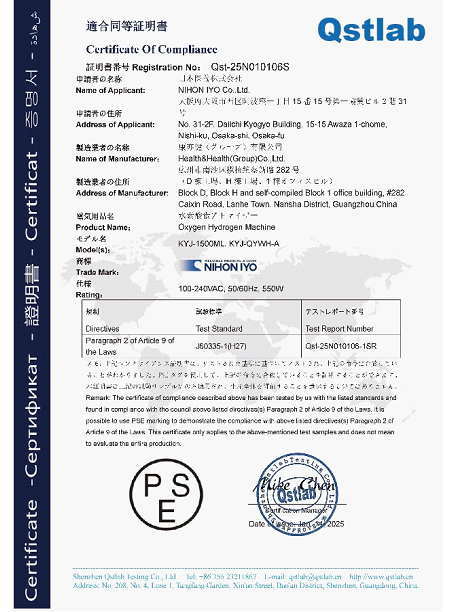
Certificate of Equivalence
CE Certification
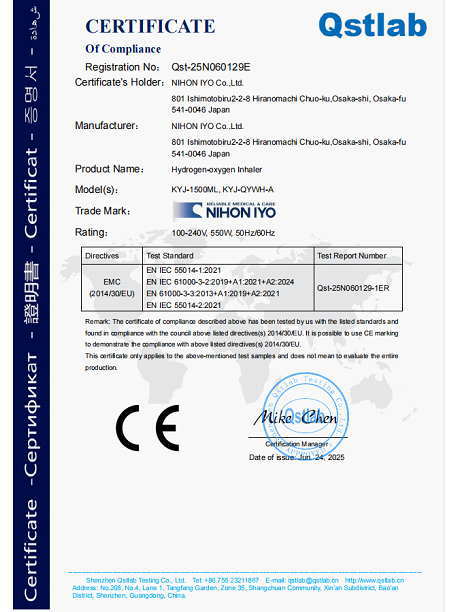
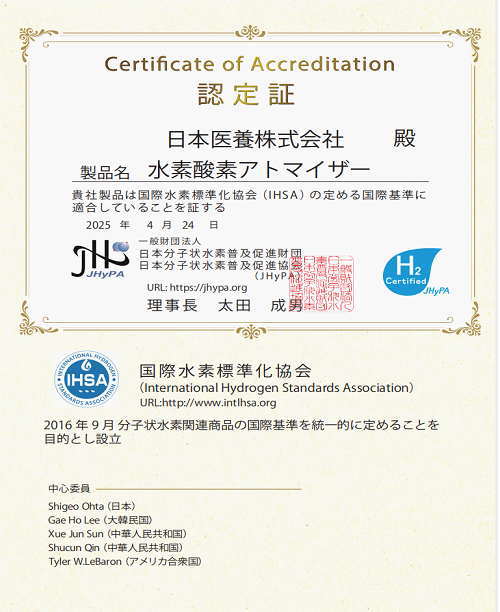
Certified by the Japan Association for the Promotion of Molecular Hydrogen
Frequently Asked Questions
-
Q: What are the benefits ofinhaling both hydrogen and oxygen simultaneously,compared to inhaling them separately?
A:
Wider Application Range:The hydrogen-oxygen machine produces a gas mixture containing 66.66% hydrogen and 33.33% oxygen.Simultaneous inhalation supports enhanced metabolism, improved skin condition, fatigue reduction,immunity enhancement,and even weight management.
Higher Safety:Though hydrogen can explode within a concentration range of 40% to 75.6% in air, under normal usage conditions the risk is extremely low. The machine is equipped with explosion-proof safety systems to prevent such events.
Better Therapeutic Effects:Studies show that hydrogen oxygen therapy is more effective than oxygen therapy alone in specific cases (e.g.,acute exacerbation of chronic obstructive pulmonary disease),with good safety and tolerance profiles. Hydrogen also has anti.
inflammatoryand antioxidant properties, aiding in the relief of stress and inflammation from viral infections.
Recognized in Medical Research: Research from China’s NationalHealth Commission and Japanese universities supports hydrogen -oxygen mixed gas (H,/0,= 66.6%/ 33.3%) for treatment in certain medical protocols.
-
Q:How long should l use it daily when starting out, and why?
A:As the body needs time to adapt to hydrogen inhalation,it is recommended to begin with a lower flow rate and graduallyincrease as the body adjusts.
Recommended Flow Rate: 1000-1500 ml/min
Duration per Session: 30-60 minutes
Frequency:1-2 times per day or 3-5 times per week,depending on your needs. For therapeutic purposes,follow your doctor's advice.
For Beginners:Start with 600 ml/min for 30 minutes per session.
-
Q:What distinguishes your hydrogen-oxygen tube from other brands?
A: Made of food-grade silicone, safe for human use;flexible, easy to store, and durable. Ifwater accumulates in the water-collection bottle after prolonged use, it can be easily unscrewed, emptied, cleaned,and reused.
-
Q:How soon will l start noticing the effects?
A:Varies from person to person. Some users may feel results within a week, while others may require up to three months.
-
Q:How often should the hydrogen-oxygen tube be replaced?
A: Every 1-2 months.lf used interchangeably among people, clean and dry after each use. Each user should have their own nasal cannula to avoid crosscontamination.
-
Q:How often should l replace purified/distilled water?
A: lf no water quality alert is triggered, replace every 7-10 days. When filled to the maximum water level and used for 8 hours per day, the water lasts around 3 days.
-
Q:How often should the filter be replaced?
A: Every 1,500 hours of operation.